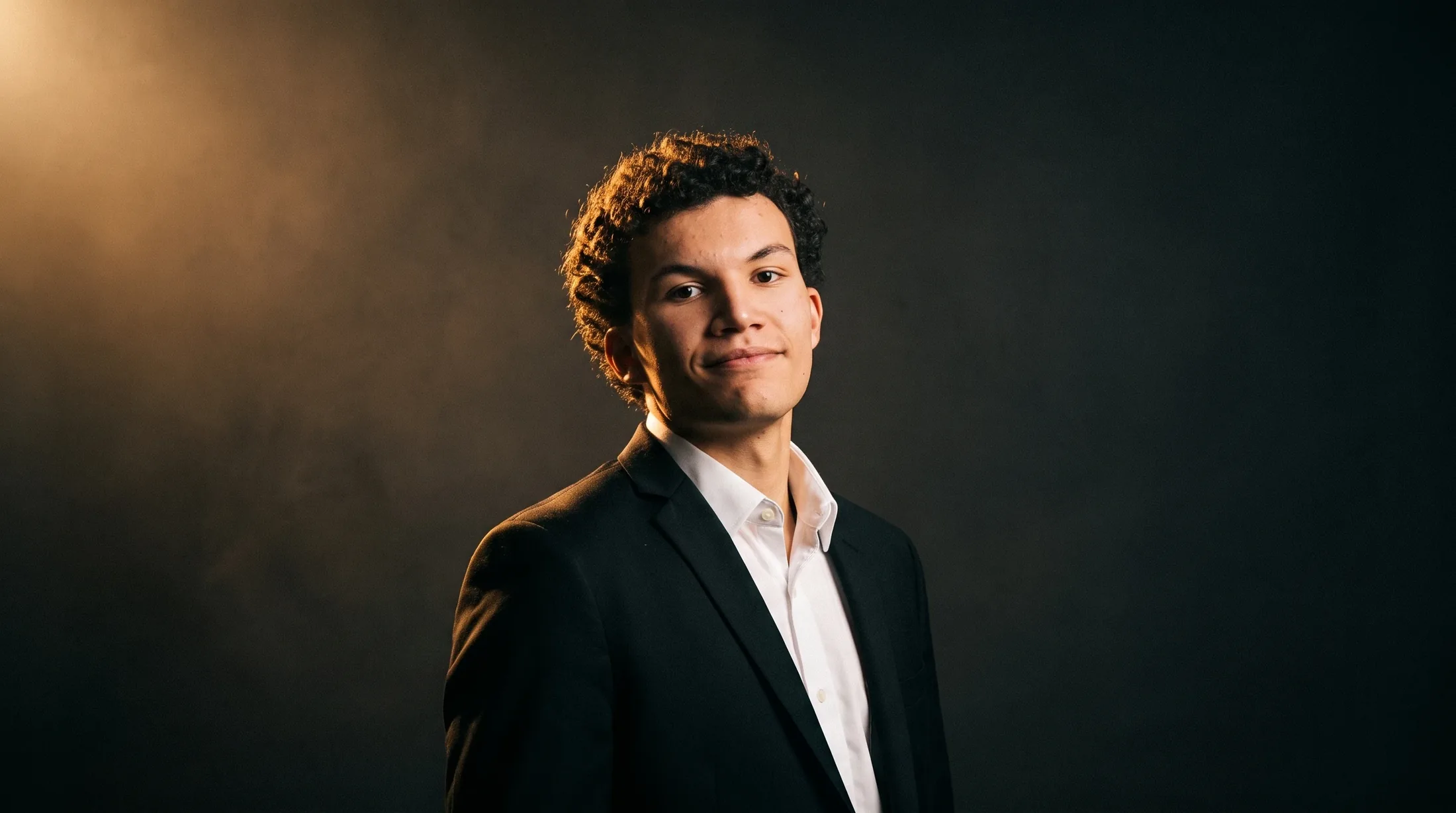
I study Software Engineering at Epitech, in Madrid. Outside of school I ship my own projects: Onbars, a calisthenics app, and a WhatsApp bot that runs 24/7 on a Raspberry Pi.
Each row is a layer of the stack I actually work with, from the Unix foundations up to the tools I use today.
01 — UNIX FOUNDATIONS
Systems & C
This is where it started: manual memory, fork/exec, pipes, and code that segfaults until you understand exactly why.
02 — MODERN STACK & PIPELINES
Tooling & Automation
Docker and Git frame every project. Bash and GitHub Actions handle the repetitive parts, TypeScript and React the interfaces.
03 — AI-ASSISTED
Working with Claude
Refactoring large codebases, reviewing diffs, prototyping an architecture before committing to it — faster, without skipping the reading.
Linux
Bash
Python
Git
React
Docker
TypeScript
Claude
CSFML
Unix Systems
PERSONAL PROJECTS
Side Projects
Web design · Local SEO
Websites for local businesses
I design and code each site from scratch around what the business does: a nail artist, a boxing gym, a dance school, a wedding photographer, an osteopath. Most of them are proposals I prepared before the first contact, to show the owner what their site could look like.
Drag to turn it, click a site to watch it move.Swipe to turn it, tap a site to watch it move.
LAUNCHING IN MADRID
Onbars — find your park. Train with others. Level up.
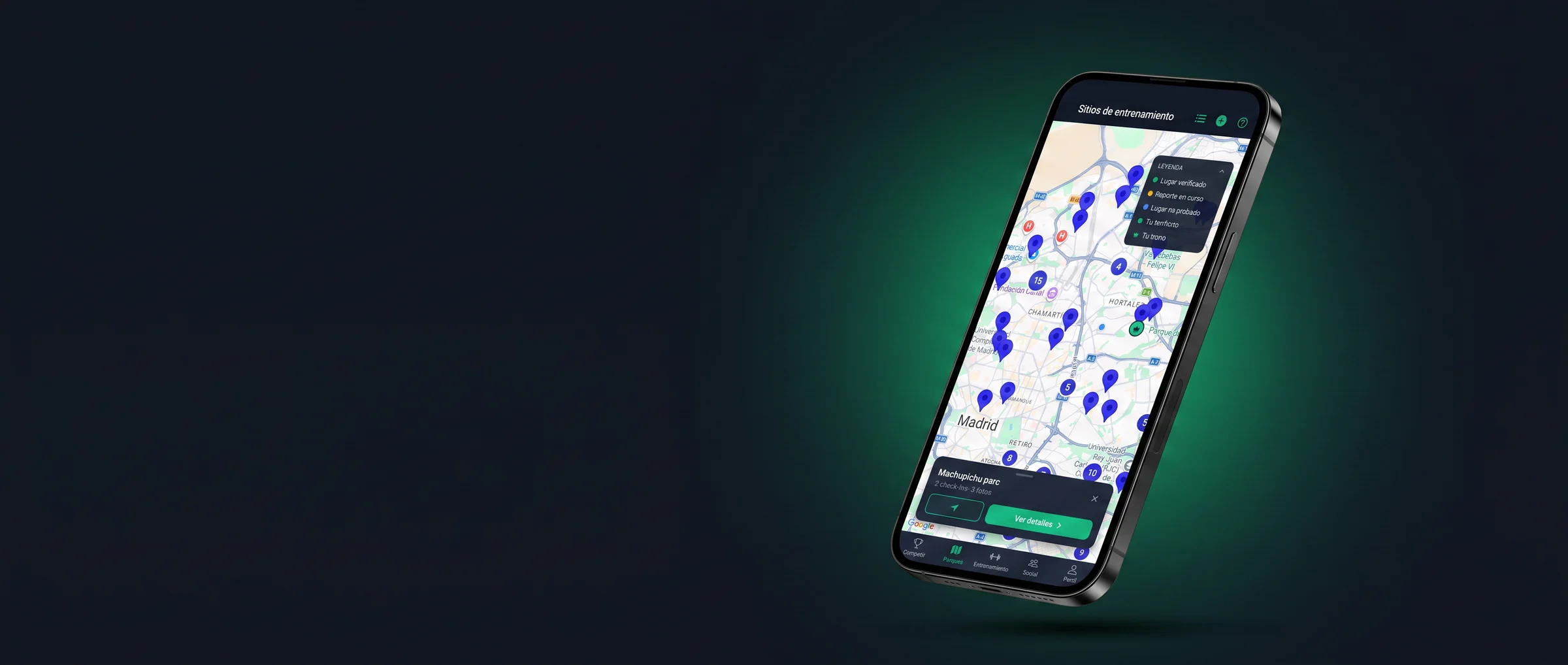
Onbars is a mobile app for street workout and calisthenics athletes. It solves three problems: finding a good outdoor pull-up and dip bar setup nearby, knowing how good you actually are compared to others, and finding people to train with.
Real parks, not guesses — imported from open map data, then verified by the athletes who train on them. One tap opens directions straight in Google Maps.
THE COMMUNITY
You never train alone again.
Meetups at the park, Kings to dethrone, badges validated by the community — in person or on video.
WhatsApp Bot
Always-on notification hub running on a Raspberry Pi
Node.js
whatsapp-web.js
CoinMarketCap
Claude
systemd
cron
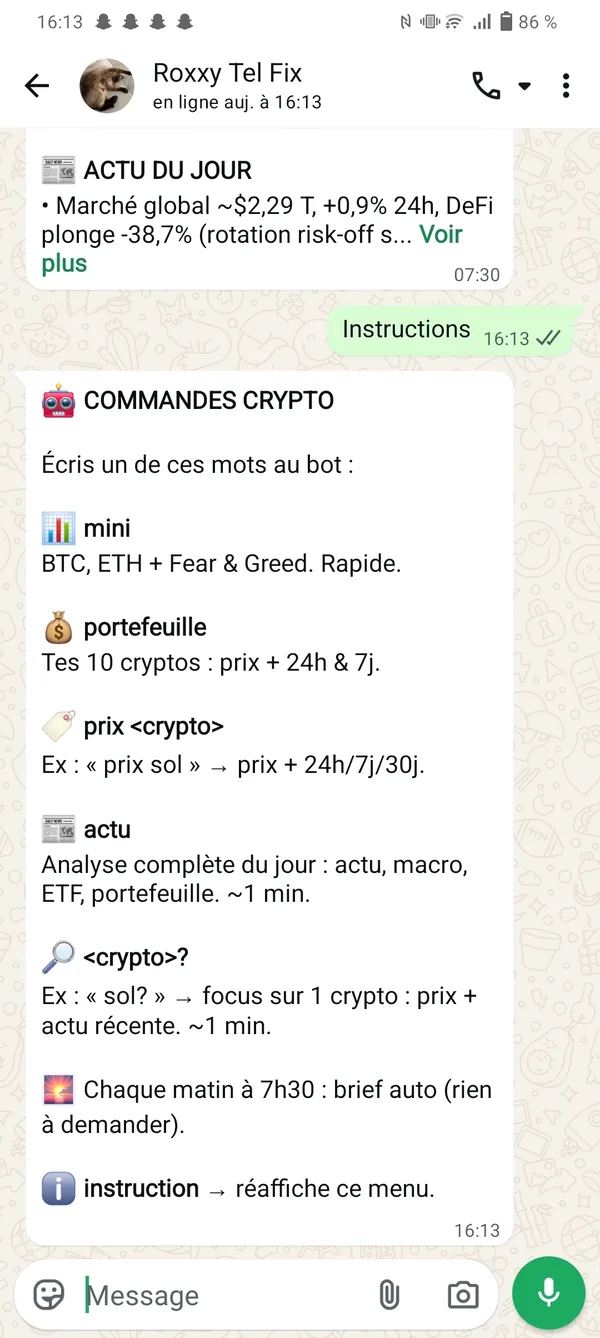
It started as a way to watch my Claude Code usage limits from my phone, then grew into a notification hub and a crypto assistant. It runs under systemd on a Raspberry Pi at home.
Polls Anthropic's OAuth usage API every 5 minutes and pings me when a session or weekly limit is hit — and again when it resets.
Answers crypto commands with live CoinMarketCap data, plus an automatic market brief every morning at 7:30.
Exposes a local HTTP endpoint any other script on the Pi can call to push a notification — including the page that tells me the cat has been fed.
A Claude Code workflow can launch dozens of agents at once, even hundreds. Each one searches, reads and runs commands. agent-lens shows you everything they do, while they do it.
9 min
of work, followed live
Agents done and running, tool calls, pages read, tokens generated: the workflow's numbers move while it runs.
6
phases
Research, Verify, Benchmark, Synthesis… every phase of the workflow, and how many of its agents have finished.
1 bar
per agent
Who started when, who is still running, who failed or stopped moving. Click a bar to open the agent.
Live
every tool call
Commands run, pages read, searches made, by which agent, the second they happen. Plus the tools and websites used the most.
36 s
inside one agent
research:maplibre, one agent out of 26: its model, its effort, how long it thought, its tokens, its errors.
17
steps, in order
Its messages, its thinking with how long each took, and every tool call from the first to the last.
Command
and its output
The exact command it ran, and everything it printed back.
8.7 s
to read one page
The URL, the question the agent asked the page, and the answer it got.
570
characters of prompt
The exact brief the agent received, formatted. One click to copy it.
6
web searches
Everything it searched, read, opened or ran, grouped by tool, with how long each call took.
Result
handed back
What the agent returned to the workflow: a JSON tree or text, to copy or download. Or export the whole agent as Markdown.
73
pages read
Plus 76 searches and 48 commands: everything the agents touched, counted, with the agents behind each one.
70
results
One word, searched across every prompt, every answer and every tool output of every agent.
See it for yourself.
Free and open source. Start it next to Claude Code: it finds your sessions on its own and follows every agent while they work.
Read-only, local on 127.0.0.1, one Python file with no dependencies. MIT licence. The interface is in French for now and has only been tested on Linux. Not affiliated with Anthropic.
Five Minutes Left is a vertical platformer I made alone in Godot for a school project: Doodle Jump meets the Chrome dino. The meteor has hit, the ground is now a wall of debris, and it is climbing.
276 m
and climbing
You never press jump: the dino bounces by itself on every platform, and a rare geyser sends it flying. You only steer left and right, and the screen wraps around at the edges.
3
hearts
Fall, or let the blast catch you, and you are thrown back up with one heart less and two seconds of invincibility. Lose all three and it's over.
1001 m
pterodactyls
Higher up, pterodactyls cross the screen. Touch one from the side and it costs a heart. Land on its back and it falls, and the heart is yours.
1419 m
the blast
The wall of debris never stops and keeps getting faster. The sky changes as you climb, five stages from the impact up to the stars.
2
players, 6 hearts
Duo mode: two dinos on one keyboard, six shared hearts. The camera follows the lower one, so you climb together or not at all.
Beat 909 m.
My best solo run. The game opens in Godot 4: clone it, open the project, press play.
A multi-robot pathfinding solver in C. It computes optimal distances with a reverse BFS from the exit in O(R+T), extracts non-overlapping shortest paths, distributes the robots by traversal cost, and resolves collisions turn by turn.
12
robots, one way in
Twelve robots wake up in ##start. They must all reach ##end, in as few turns as possible.
rooms from the exit
First, a wave leaves the exit and gives every room its distance to it, dead ends included.
separate routes
Walking down the numbers from the start, it opens three routes that never share a room.
turn
Each turn, every robot moves one room ahead, if that room is free: never two robots in the same room.
turns, all twelve out
Each robot took the route that got it out soonest: five on the shortest one, four and three on the others.
Animation: twelve robots cross a maze from one start room to one exit along three separate routes, one robot per room, in 11 turns.
A C solver for the largest empty square in a grid full of obstacles. One dynamic-programming pass gives every cell the side of the biggest square ending there — min(top, left, diagonal) + 1 — and a second scan keeps the first, top-most left-most record. Checked against all 36 reference maps and a 10,000 x 10,000 grid.
01234567
No square yet
A map full of obstacles. Where does the biggest empty square fit?
It reads the map once, cell by cell. Each number is the side of the biggest square that ends on that cell.
Every time a bigger square turns up, it becomes the new record. The old one stays as a ghost.
It keeps searching to the very last cell. Nothing beats 7 × 7.
Then it prints the map with the square marked in x, exactly as the program does.
A Unix shell in C. The parser builds a binary execution tree from right-associative operator precedence, then walks it: fork/exec, pipe IPC, redirections (>, >>, <, <<), built-ins and environment variables.
mysh — ~/minishell
0000000000
~/minishell $ ./mysh
$>
Your turn: click and type.
The shell, rebuilt in your browser: ls, cat, grep, wc, head, echo, cd, env, setenv, make… chained with ; | > >> < <<. ↑ brings back a line.
1;2|3>4<
1process for this line
Type a line: its tree grows here.
Before running anything, the shell cuts the line into a tree: at ; first, then |, then >, then <. On Enter every command becomes a process (fork, then execve), and pipes carry the output from one to the next.
An air traffic control simulator in CSFML, dressed as Fortnite: the planes are Battle Buses, the control towers are Tilted Towers' clock tower. Buses collide and explode unless one of them flies inside a tower's circle, and storms bounce around the map. An adaptive quadtree rebuilt every frame only compares buses that share a cell — the counters under the map show, live, how many checks that saves.
00:00
PLANES :0
PAIRS TESTED :0
EVERY PAIR :0
STORMS :3
X-
FEWER TESTS
TWO BUSES THAT TOUCH BOTH EXPLODE, UNLESS ONE OF THEM IS INSIDE A TOWER'S CIRCLE. EACH BUS IS ONLY TESTED AGAINST THE BUSES IN ITS OWN SQUARE, AND A SQUARE SPLITS IN FOUR PAST 8 BUSES.